
Motorsport Teamwear: The Practical Guide to Looking Professional Trackside (Without Wasting Money)
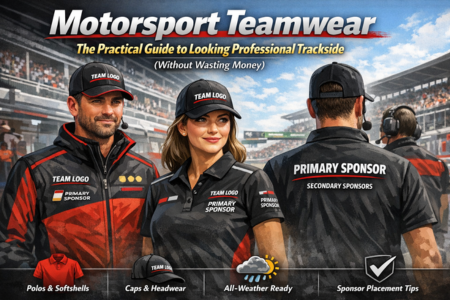
Motorsport teamwear is not just “workwear with a logo”.
At the track, your kit is doing three jobs at once: it has to look credible in paddock photos, keep the team comfortable through heat, wind and sudden rain, and carry sponsor branding in a way that looks intentional (not like you raided a sticker pack).
That is where most teams waste money.
They buy a random mix of polos, hoodies and jackets that do not match. They cram sponsor logos wherever there is space. Or they choose garments that feel fine on day one, then lose shape, fade, and look tired halfway through the season. And once your kit looks messy, it affects perception. Sponsors notice. Other teams notice. Even customers notice.
This guide is the practical buyer playbook for motorsport teamwear in the UK: what to buy first, which items give you the most visibility, how to place sponsor logos so it looks professional, and how to order kit that stays consistent across reorders when you need last-minute top-ups before race weekend.
If you want to browse while you read, start with the Motorsport Teamwear collection and keep the core options tight using Selected Garments. For the items motorsport teams rely on most, you will usually be choosing from Softshell for trackside layering and Headwear for sponsor visibility. And if you are ordering against a race calendar, the Order Process is worth a quick read so you understand proof approval and dispatch timing before you hit panic mode.
What motorsport teamwear needs to do that normal workwear does not
Motorsport teamwear has one brutal difference from normal workwear.
Normal workwear just needs to be practical and presentable.
Motorsport teamwear needs to be seen.
By sponsors. By cameras. By other teams. By customers. By anyone scrolling race weekend photos.
And that changes how you should buy it.
1) Sponsor visibility without looking like a walking billboard
The goal is not “fit every logo on every garment”.
The goal is sponsor clarity:
- People can tell who the team is
- Key sponsors are readable at a glance
- The layout looks planned, not cluttered
That usually means you prioritise the most visible items first (polo, softshell, cap) and keep the sponsor hierarchy consistent across the kit. We will cover the exact placement rules later, but if you want to see the types of garments that take branding well, start in the Motorsport Teamwear collection.
2) Heat, movement, and “trackside reality”
A paddock is not an office. You are walking, leaning, lifting, and moving all day.
So motorsport teamwear needs to:
- stay comfortable in heat (without feeling flimsy)
- handle sweat and regular washing
- move well without logos cracking or feeling stiff
- avoid annoying details that become unbearable after 10 hours trackside
This is why teams often run a two-layer system:
- a smart base layer for warm conditions (usually a polo)
- a weather layer that still brands cleanly (usually a softshell)
If you are building the layering piece first, Softshell is the workhorse category for motorsport because it handles changing conditions and keeps logos visible.
3) Fast layering for UK weather changes
You can start a race morning in cold wind, get sun at midday, then get hit by rain in the late afternoon. A hoodie alone is rarely enough.
Good teamwear setups let people layer quickly without destroying the uniform look.
That is why most teams end up with:
- polos for the “clean professional” look
- softshells for wind and light rain
- a cap for sponsor visibility and team identity
If you want the easiest “visible upgrade” for sponsor exposure per pound spent, headwear is usually the first win. A cap is always on camera. Always in the paddock. Always in fan photos. Start with Headwear when budgets are tight.
4) Team cohesion: why consistent kit impacts credibility
This is the part teams underestimate.
When your kit matches, you look like a serious operation.
When it does not, you look like a group of individuals with similar colours.
Consistency signals:
- organisation
- professionalism
- sponsor value
- trustworthiness
That matters whether you are a grassroots team or running a bigger programme.
If you are trying to build a repeatable, uniform system, use Selected Garments to keep choices tight, then reorder the same items rather than reinventing the kit each event.
Quick motorsport teamwear reality check
- Motorsport kit needs sponsor readability, not logo clutter.
- You need a layering system because trackside weather changes fast.
- The most visible items are usually caps, polos, and softshells.
- Consistent teamwear improves credibility and sponsor perception.
- Wash resistance matters more than buyers think, because motorsport kit gets worked hard.
The core kit list (what to buy first)
If you want motorsport teamwear that looks professional trackside, do not start by buying “a bit of everything”.
Start by buying the items that:
- get seen in photos
- get worn all day
- carry sponsor branding cleanly
That is how you build a kit that looks intentional without wasting money.
Trackside staples: polos, hoodies, softshells, caps
Polo shirts (your default “professional” layer)
Polos are the cleanest way to look like a team, not a group. They are also one of the easiest garments to brand without it looking shouty.
If you want the base layer to do most of the work, start with Polo Shirts.
Softshells (the trackside workhorse)
Softshells are what teams live in when the weather turns or the wind picks up. They also look premium when branded well, which matters because jackets are what end up in most paddock photos.
Start with Softshell if you are building your “serious team” layer first.
Hoodies (comfort layer for the team)
Hoodies are great for warmth and comfort, especially early mornings and late pack-downs. They are less “formal” than polos, but they are one of the most worn items across a season.
Browse Hoodies when you want a practical layer that gets worn hard.
Caps and beanies (highest sponsor visibility per pound)
Headwear is constantly visible. It is worn by drivers, crew, and support teams, and it shows up in photos even when jackets cover everything else.
Start with Headwear if you need maximum sponsor value quickly.
Cold and wet days: outerwear that still brands well
Trackside weather is unpredictable, and bulky coats can kill branding if the logo gets lost in folds and seams.
The safest outerwear choices for branding are garments with:
- a clean chest area for primary marks
- enough structure to keep logos flat and readable
- a finish that does not look “cheap” in photos
If you want a clean, consistent kit without digging through hundreds of options, use Selected Jackets as a shortcut.
Budget reality: how to prioritise “most visible items” first
If your budget is tight, do not split it across everything.
Prioritise in this order:
- Headwear (always visible, lowest cost, huge sponsor exposure)
- Polos (professional identity, worn in warm conditions)
- Softshells (premium look, visible in photos, essential for weather)
- Hoodies (comfort layer, worn a lot, but less “official” than polos)
If you want to keep everything cohesive and reorder-friendly, start your build inside the Motorsport Teamwear collection and keep your choices tight with Selected Garments.
Quick kit checklist
- Must-have first buys: cap, polo, softshell
- Add next: hoodie for comfort and colder mornings
- Prioritise visibility: headwear and outer layers beat extra “nice to have” items
- Keep it consistent: fewer garment styles, cleaner sponsor layouts, easier reorders
Sponsor logo placement rules (so it looks pro, not cluttered)
Motorsport teamwear lives or dies by layout. The difference between “professional team kit” and “busy mess” is not the number of sponsors. It is hierarchy, spacing, and consistency.
Primary sponsor hierarchy (the simple framework)
Use this sponsor order every time, across every garment:
- Team identity (always first): your team name or primary mark
- Primary sponsor: the one that matters most commercially
- Secondary sponsors: visible, but smaller and controlled
- Supporters/partners: only if you have space without clutter
If you do not do this, you end up with sponsors fighting each other, and nothing is readable.
Sleeve vs chest vs back (what goes where)
Left chest
Best for team identity or a primary sponsor mark. It reads as uniform, and it stays visible when jackets are zipped.
Right chest
Great for secondary sponsor or a driver name if you want that detail. Do not overload both sides with full-size logos.
Upper back
Best for a larger sponsor mark that needs visibility in paddock photos. Keep it high and centred. Avoid full back “wallpaper” designs unless it is a deliberate teamwear style.
Sleeves
Perfect for smaller sponsor logos. Sleeves are visible in action photos, and they keep the front clean.
Headwear
Caps are sponsor gold. One clean front logo usually beats multiple messy ones. Start with Headwear when you need maximum exposure fast.
Sizing rules that prevent “busy” layouts
Use these simple sizing rules to keep everything readable:
- One hero logo per area. If the chest is the hero, sleeves are supporting.
- Leave breathing room. Logos need space around them to look premium and read well.
- Match sizes across the team. The same sponsor should be the same size on everyone.
- Do not go huge “because we can”. Oversized logos look like freebies, not team kit.
If you want a clean starting point, build the core items from the Motorsport Teamwear collection and keep garments consistent via Selected Garments.
Quick sponsor placement cheatsheet
- Team logo: left chest (always)
- Primary sponsor: left chest or upper back (pick one as the hero)
- Secondary sponsors: sleeves first, then small chest marks
- Headwear: one clean logo front and centre
- Avoid clutter: readability beats quantity every time
Branding methods for motorsport use-cases
You do not need a long debate. You need the method that survives trackside use and still looks sharp in photos.
When embroidery is best
Choose embroidered teamwear when you want:
- the most professional, premium look
- branding that survives heavy wear and washing
- smaller logos that need crisp edges (team mark, chest sponsor, sleeve mark)
Embroidery is usually the safest option for:
- polos
- caps
- softshell chest branding
When print is best
Choose printed teamwear when you need:
- larger sponsor marks (upper back, bigger chest layouts)
- detailed logos with colour gradients
- a sponsor-heavy layout that would be impractical to stitch everywhere
Print works well when:
- the garment has enough structure to keep logos flat
- you avoid high-heat washing and tumble drying
- you keep the layout clean and readable
Quick decision rules (snippet-friendly)
- Want the most premium look? Embroidery on the chest and headwear.
- Need big sponsor visibility? Print on the upper back, keep it structured.
- Sponsor-heavy kit? Mix methods: embroidery for the core identity, print for large sponsor zones.
- Wash a lot? Avoid oversized prints on lightweight garments.
If you are building your “weather layer” first, Softshell is a strong base for professional branding that holds shape.
Ordering without mistakes
Motorsport ordering pressure is real. Race calendar deadlines do not care about proofs, revisions, or courier delays.
So you need a process that prevents last-minute rework.
Proof approval checklist (save this)
Before you approve, check:
- Logo hierarchy is correct (team mark first, then primary sponsor, then secondary)
- Placement is consistent across garments (same sponsor, same spot)
- Sizes look balanced (no “randomly bigger on this hoodie” issues)
- Spacing is clean (no cramped logos, no near-touching marks)
- Colours are correct (especially for sponsor brand colours)
- Text is readable (small text is where mistakes hide)
- Names and numbers are spelled correctly
If you want to understand the workflow end to end, the Order Process shows exactly how proofing and production run.
Delivery date planning for race calendar pressure
If your next event is fixed, plan backwards:
- Allow time for proof changes
- Avoid changing garments mid-order (it slows everything down)
- Keep the first order tight, then top up later
If you are a small team, do not try to build “everything” for the first race. Build the visible core kit first, then add depth.
To reduce panic buying, start with reorder-friendly basics via Selected Garments and keep the same garment base for future top-ups.
Quick ordering rules
- Approve proofs carefully. This is where mistakes get prevented.
- Keep sponsor hierarchy consistent. Same sponsor, same size, same placement.
- Plan around your delivery date. Racing deadlines are unforgiving.
- Do not switch garments late. Late changes create delays and inconsistency.
Quick answers
Best kit for small teams
Keep it simple and visible:
- cap
- polo
- softshell
- hoodie (optional)
Start in the Motorsport Teamwear collection and pick a tight set rather than mixing brands and fits randomly.
Best kit for sponsor-heavy teams
Your goal is a clean hierarchy, not maximum logo count:
- softshell for trackside visibility
- polo for warm days
- cap for sponsor exposure
- structured upper back print zone for the primary sponsor
- sleeves for secondary sponsors
Use Softshell and Headwear as your high-visibility anchors.
What lasts longest trackside
Longevity comes from:
- structured garments that hold shape
- restrained logo layouts
- correct wash habits
- good proofing so you do not redo orders
Embroidery on chest marks and headwear tends to be the longest-lasting in heavy use.
Where should sponsor logos go?
Use the hierarchy:
- team logo left chest
- primary sponsor upper back or chest (choose one hero area)
- secondary sponsors sleeves
- keep spacing clean so everything reads
Closing: the motorsport teamwear shortcut that saves money
Motorsport teamwear is expensive when you buy it twice.
The cheapest kit is not the lowest unit price. It is the kit that:
- looks professional in photos
- keeps sponsors readable
- stays consistent across reorders
- survives a season of trackside use
If you want the fastest path to a pro look, start with the core items in the Motorsport Teamwear collection, keep choices tight using Selected Garments, and build around the most visible categories first: Headwear and Softshell.
If you want to sanity-check quality and service, the Feedback page is worth a quick scan. And if you are ordering against a race date and want the safest recommendation for your sponsor layout and garment mix, start with the Order Process so you know where proof approval sits, then place the order with confidence.